Frank Rose

  Home | Wired | Books | Archive  

Recent Articles

Wired Magazine
And Now, a Game from Our Sponsors
Secret Web sites, coded messages, hidden songs—explore the new world of immersive games.
A Second Chance for 3-D
Hollywood is tapping into the third dimension—starting with Angelina Jolie in Beowulf.
Lonely Planet
Inside Second Life: How Madison Avenue is wasting millions on an empty digital world.
Philip K. Dick Goes Legit
Ushered into the canon by the Library of America: An interview with Jonathan Lethem, novelist and fan.
And Now, a Word From Our Customers
Chevrolet asked Web users to make their own video spots for the Tahoe. A case study in customer-generated advertising.
Can the PS3 Save Sony?
If Sony's new $600 console doesn't blow gamers away, it may be time to say sayonara.


Find Authors

And Now, a Game from Our Sponsors

The future of advertising isn't writing better slogans or using cool photography or video. It's creating interactive stories people can explore over their phones, on the Web, maybe even through a flash drive hidden in a bathroom. It's a new art form. Just ask Nine Inch Nails' Trent Reznor.

Wired 16.01
, January 2005


THE INITIAL CLUE WAS SO SUBTLE that for nearly two days nobody noticed it. On February 10, 2007, the first night of Nine Inch Nails' European tour, T-shirts went on sale at a 19th-century Lisbon concert hall with what looked to be a printing error: Random letters in the tour schedule on the back seemed slightly boldfaced. Then a 27-year-old Lisbon photographer named Nuno Foros realized that, strung together, the boldface letters spelled "i am trying to believe." Foros posted a photo of his T-shirt on the Spiral, the Nine Inch Nails fan forum. People started typing "iamtryingtobelieve.com" into their Web browsers. That led them to a site denouncing something called Parepin, a drug apparently introduced into the US water supply. Ostensibly, Parepin was an antidote to bioterror agents, but in reality, the page declared, it was part of a government plot to confuse and sedate citizens. Email sent to the site's contact link generated a cryptic auto-response: "I'm drinking the water. So should you." Online, fans worldwide debated what this had to do with Nine Inch Nails. A setup for the next album? Some kind of interactive game? Or what?

A few days later, on February 14, a woman named Sue was about to wash a different T-shirt, which she had bought at one of the Lisbon shows, when she noticed that the tour dates included several boldface digits. Fans quickly interpreted this as a Los Angeles telephone number. People who called it heard a recording of a newscaster announcing, "Presidential address: America is born again," followed by a distorted snippet of what could only be a new Nine Inch Nails song. Then, a woman named Ana reported finding a USB flash drive in a bathroom stall at the hall where the band had been playing. On the drive was a previously unreleased song, which she promptly uploaded. The metadata tag on the song contained a clue that led to a site displaying a glowing wheat field, with the legend "America Is Born Again." Clicking and dragging the mouse across the screen, however, revealed a much grimmer-looking site labeled "Another Version of the Truth." Clicking on that led to a forum about acts of underground resistance.

All this activity had been set in motion months before. Trent Reznor, the singer — songwriter behind Nine Inch Nails, had been recording Year Zero, a grimly futuristic suite evoking an America beset by terrorism, ravaged by climate change, and ruled by a Christian military dictatorship. "But I had a problem," he recalls, lounging on a second-floor deck of the house he's remodeling in Beverly Hills: how to provide context for the songs. In the '60s, concept albums came with extensive liner notes and lots of artwork. MP3s don't have that. "So I started thinking about how to make the world's most elaborate album cover," he says, "using the media of today."

Years earlier, Reznor had heard about a complex game played out over many months, both online and in the real world, in which millions of people across the planet had collectively solved a cascading series of puzzles, riddles, and treasure hunts that ultimately tied into the Steven Spielberg movie AI: Artificial Intelligence. Developed by Jordan Weisman, then a Microsoft exec, it was the first of what came to be called alternate reality games — ARGs for short. After leaving Redmond, Weisman founded a company called 42 Entertainment, which made ARGs for products ranging from Windows Vista to Pirates of the Caribbean: Dead Man's Chest. Reznor wanted to give his fans a taste of life in a massively dysfunctional theocratic police state, and he decided that a game involving millions of players worldwide would help him do that in a big way.

Reznor was stepping into a new kind of interactive fiction. These narratives unfold in fragments, in all sorts of media, from Web sites to phone calls to live events, and the audience pieces together the story from shards of information. The task is too complicated for any one person, but the Web enables a collective intelligence to emerge to assemble the pieces, solve the mysteries, and in the process, tell and retell the story online. The narrative is shaped — and ultimately owned — by the audience in ways that other forms of storytelling cannot match. No longer passive consumers, the players live out the story. Eight years ago, this kind of entertainment didn't exist; now dozens of such games are launched every year, many of them attracting millions of followers on every continent.

How could this work for Year Zero? Reznor had spent a long time thinking and writing about the future dystopia he imagined. Now he wanted to share this story with his fans. He filled in the contact form on 42 Entertainment's Web site and clicked Send.

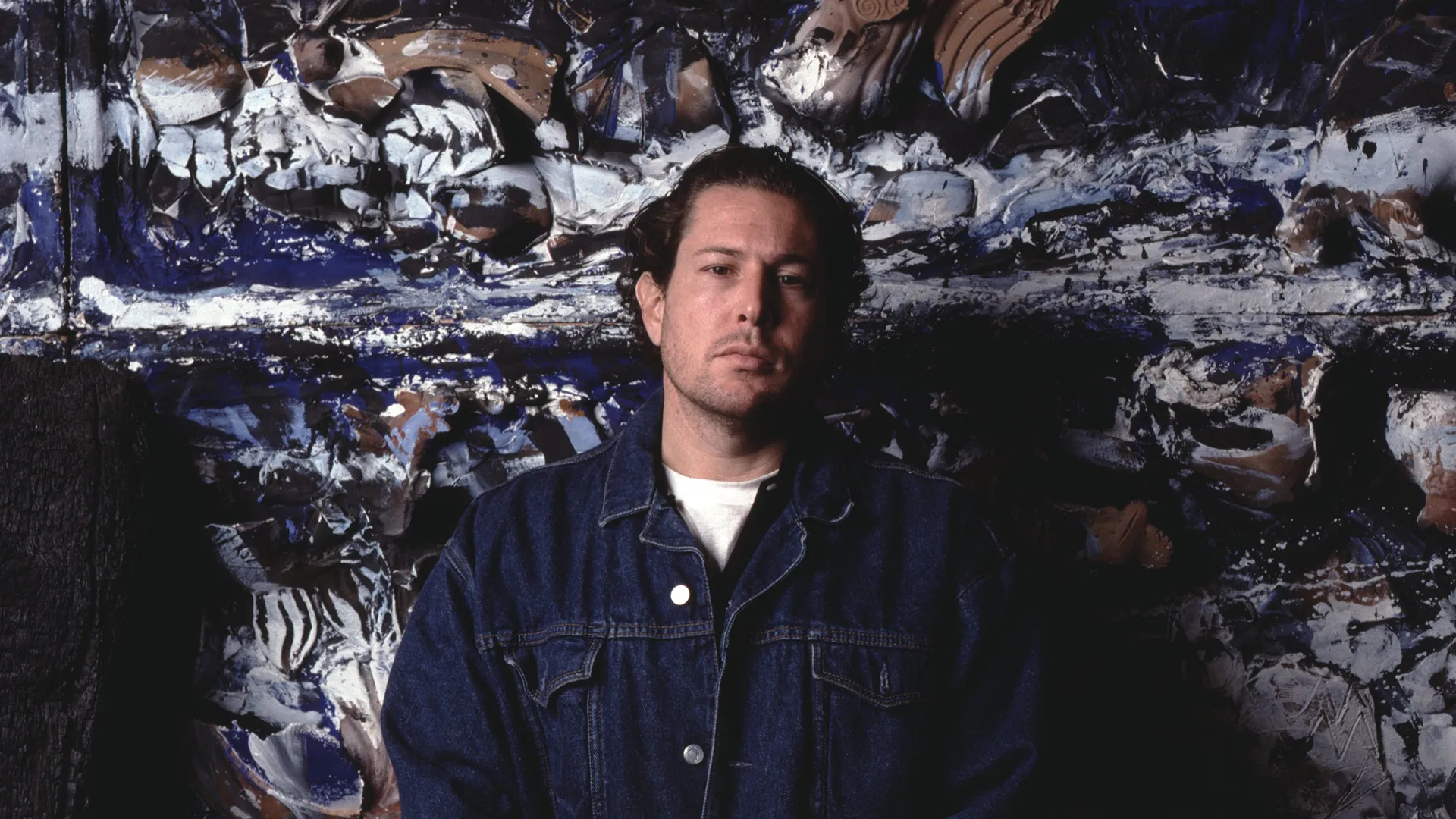
Alex Lieu, Susan Bonds, and Jordan Weisman of 42 Entertainment. Photo: Robert Maxwell

WHEN WEISMAN OPENED REZNOR'S EMAIL at his lakefront house near Seattle, he had barely heard of Nine Inch Nails. Slender and soft-spoken, with curly dark hair and a salt-and-pepper beard that gives him a vaguely Talmudic appearance, he's not big on hardcore industrial rock. His experience is more in game design and social interaction, two fields he views as intimately conjoined. "Games are about engaging with the most entertaining thing on the planet," he says, sipping coffee in his guesthouse, "which is other people."

In 2001, Weisman was creative director of Microsoft's entertainment division, which was developing the Xbox and a number of videogames — including one based on AI — to support its launch. The AI game never materialized, but the ARG Weisman created was phenomenally successful. He left Microsoft and in 2003 decided to do ARGs full-time, launching 42 Entertainment as a boutique marketing firm. He took the name from The Hitchhiker's Guide to the Galaxy, which reports that "the Answer to the Ultimate Question of Life, the Universe, and Everything" is, in fact, 42. The company's first game, ilovebees, had people answering pay phones around the world in the weeks leading up to the release of Halo 2. One player even braved a Florida hurricane to take a call in a Burger King parking lot.

Similar games have been used to launch scores of products in the years since. GMD Studios, a Florida outfit, staged a fake auto theft to begin a game for Audi that drew more than 500,000 players. A London studio called Hi-Res! used television ads and specially made chocolate bars, among other things, in a still-talked-about game touting JJ Abrams' Lost. More recently, someone — not 42 — has been planting enigmatic clues on Web sites and fake MySpace profiles to promote a film Abrams is producing that so far is best known by the codename Cloverfield. What's all this about a Japanese drink called Slusho? And what does it have to do with the sudden appearance of a Godzilla-like monster in New York Harbor? Abrams fans have been falling all over themselves to figure it out.

"When done well, ARGs can be extraordinarily effective," says Ty Montague, creative director of the J. Walter Thompson ad agency. That's because the games offer marketers a solution to a growing problem: how to reach people who are so media-saturated they block all attempts to get through. "Your brain filters it out, because otherwise you'd go crazy," Weisman says. That's why he opted for a "subdural" approach: Instead of shouting the message, hide it. "I figured that if the audience discovered something, they would share it," he explains, "because we all need something to talk about."

The ARG for AI began with an obscure credit for a "sentient machine therapist" in both the trailer and a prerelease promotional poster. Soon someone — all signs point to a member of Weisman's group — wrote Harry Knowles at Ain't It Cool News, suggesting he Google the therapist's name. That led to a maze of bizarre Web sites about robot rights and a phone number that, when called, played a message from a woman whose husband had just died in a suspicious boating accident. Within 24 hours, thousands of people were trying to figure out what had happened.

Weisman had long been working toward that moment. Severely dyslexic as a kid, his world changed when he was introduced to Dungeons & Dragons. "Here was entertainment that involved problem solving and was story-based and social," he says. "It totally put my brain on fire. What we're doing now is a giant extrapolation of sitting in the kitchen playing D&D with friends. It's just that now our kitchen table holds 3 million people" — the number that ultimately engaged with the AI game.

During the development of that first ARG, Weisman argued that no puzzle would be too hard, no clue too obscure, because with so many people collaborating online, the players would have access to every conceivable skill set. Where he erred was in not following that idea to its logical conclusion. "Not only do they have every skill on the planet," he says, "they have unlimited resources, unlimited time, and unlimited money. Not only can they solve anything, they can solve anything instantly." Weisman dubbed his game the Beast, because originally it had 666 pieces of content. But as the players burned through those and clamored for more, the name took on a different meaning. He had created a monster.

Weisman and Spielberg viewed the Beast as an extension of AI. But the bill to fund it came out of the film's marketing budget, and the ARG certainly created buzz for the movie. Meanwhile, the Internet was transforming marketing. Western commerce had been built on a clear proposition: I give you money, you give me something else of value. But like a rug merchant who offers prospective buyers tea before discussing his wares, the Internet was beginning to engage and entertain customers — whether with free singles on iTunes or an ARG that could run for months — before asking them to part with their money. "All marketing," Weisman says, "is headed in that direction."

FOR NINE INCH NAILS FANS, the unfolding of the Year Zero game was as puzzling as it was exciting. "We didn't know where it would go," says Cameron Ladd, a 19-year-old community college student in rural Ohio who helps moderate the Nine Inch Nails fan forum Echoing the Sound. "We had no idea of the scope. That was the most fun — not knowing what would come next." Debates raged as to whether it had anything to do with Philip K. Dick or the Bible, how it compared with Children of Men or V for Vendetta, and why the Year Zero Web sites kept referring to something called the Presence, which appeared to be a giant hand reaching down from the sky. The band's European tour dates became the object of obsessive attention. "It was like, bang-bang-bang — there were so many things happening at once," Ladd says. "It was one gigantic burst of excitement."

Fans in Europe were so eager to find new flash drives that they ran for the toilets the moment the concert venue doors opened. On February 18, at the Sala Razzmatazz in Barcelona, someone scored. The drive contained an MP3 file of a new Nine Inch Nails song that trailed off into the sound of crickets.

But when the cricket sounds were run through a spectrograph, they yielded a series of blips that gradually resolved into a phone number in Cleveland, Ohio. People who dialed this number (and some 1.7 million did) heard a horrific recording from a mysterious organization called US Wiretap: a young woman on her cell phone at an underground nightclub, with shrieking and gunshots in the background, screaming hysterically that someone had come into the club and killed her friend and that the cops had locked everybody inside and she was going to die. A visit to uswiretap.com ("A Partnership Corporation of the Bureau of Morality") revealed that federal agents had bolted the doors to the club, a known "resistance" hangout, while the 112 people inside spent two days tearing one another to shreds in a mad frenzy.

The clues on the flash drives were typical of what makes a good ARG work. They were hard to spot and even harder to decipher, but because the narrative was being pieced together online, you didn't have to be a propellerhead to follow it. "Our assumption," says Sean Stewart, the game's head writer, "was never that there's a continent of people who love nothing better than to do spectrogram analysis. But there are always a few, and if you make a world that's compelling enough, there'll be a lot to do even if you're not interested in the really arcane stuff."

Most fans didn't realize their progress was being monitored nonstop. Unlike less interactive forms of entertainment, ARGs require a close collaboration between the puppet masters — the unseen figures who create the story — and the audience. "The makers and the consumers are in a tango," Stewart says. "It's a dance, it's passionate, and sometimes there are sinister overtones. It creates a unique dynamic."

After every gig, Reznor rushed back to his hotel so he could watch the action on fan forums and in chat rooms unfold on his laptop. "I couldn't wait," Reznor says. "'Did they find it? Did they find it?' I know it sounds nerdy, but it was exciting." The 42 Entertainment team, working out of a cramped loft in downtown Pasadena, California, kept an even closer watch. They had to make sure the players didn't get frustrated or go too far down a wrong path.

It didn't take long to spot the first problem. On several sites, brief snippets of text from mildly subversive books — One Flew Over the Cuckoo's Nest, Slaughterhouse-Five, Heather Has Two Mommies — had been scanned into the background to provide visual interest. Players, however, were interpreting them as clues and trying to figure out what they meant.

At 42 Entertainment, panic set in. "It's a silent contract," explains Steve Peters, the game designer charged with tracking player progress. "We respect you — which means we're not going to lead you along by the nose and then not give you anything." They decided to add a clue suggesting that the texts were from banned books.

There were more complications to come. Reznor presumed that weeks before the CD reached Wal-Mart and Best Buy, someone would upload it to the BitTorrent sites, which his most avid fans would be carefully monitoring. So he planted hints in the music — a few seconds recorded out of phase on "The Great Destroyer," for instance. Played on a monaural device, the music briefly canceled itself out, leaving nothing except a barely audible voice saying something like "red horse vector." At redhorsevector.net, players would find a top-secret report suggesting the source of the nightclub massacre — a weaponized virus called Red Horse that caused acute homicidal psychosis.

Surprisingly, though, no one was uploading the album. Reznor had assumed it would hit the peer-to-peer sites by mid-March, but at the end of that month there was still no sign of it. Without the music, only a handful of new clues were coming out. "The fans were getting antsy," says Alex Lieu, 42 Entertainment's creative director. "So were we. Trent was stunned. And the whole time we were thinking, 'When is someone going to steal this album?'"

REZNOR WOULD LIKE TO MAKE one thing about the Year Zero game perfectly clear: "It's not fucking marketing. I'm not trying to sell anything." That's why he paid for the game himself, out of his recording budget. For a while, he didn't even tell his label what he was doing. But the game was extremely effective at generating excitement. Every time a song was leaked, the message boards were swamped. By the time the album hit store shelves in April, 2.5 million people had visited at least one of the game's 30 Web sites. The buzz was so great that Interscope chair Jimmy Iovine — Reznor's label boss at Universal Music at the time — called Weisman to talk about buying 42 Entertainment.

From 42's perspective, it hardly matters whether you call the game "marketing" or not. What matters is that someone — Reznor, Microsoft, Disney — writes a check. And, for now, the checks generally come from companies trying to sell something. As a result, many ARG developers want to break out of marketing entirely and find another way to make money. Novelists, film directors, and television producers get to tell their own stories; why not ARG-makers? GMD Studios, the company behind the ARG for Audi, has been running a game that it hopes will spawn graphic novels and maybe a TV show. In September, Stewart and two other longtime associates of Weisman's left 42 Entertainment to start a new company, Fourth Wall Studios, with similar ambitions.

So far, however, no one has managed to create an ARG that can sustain itself through advertising, subscription fees, or any other model. The most ambitious attempt was Perplex City, a vast treasure hunt staged by a London company called Mind Candy, which has received $10 million in venture capital — a first in ARG-land. Perplex City was said to be a locale in an alternate universe whose most powerful artifact, a polished metal cube, had been stolen and buried somewhere on Earth; whoever found it stood to receive a $200,000 reward. Clues were hidden on a series of cards sold in toy shops, bookstores, and online for about $1 apiece.

VCs had visions of Pokémon dancing in their heads. But though 50,000 people in 92 countries registered for the game, the cards turned out to be difficult and expensive to produce. Last June, not long after the cube was unearthed in a forest in England, a planned second season was abruptly canceled. "I'm still convinced there are exciting commercial models that no one has found just yet," says Michael Smith, Mind Candy's CEO. "It's a wonderful world we created, and I very, very much want to relaunch it." Unfortunately, he doesn't know when that will happen.

AS THE ALBUM'S RELEASE DATE approached, the game hit the peer-to-peer sites and regained its momentum. Meanwhile, Reznor and the team from 42 Entertainment had a critical planning session in London to figure out a way to wrap it up. Elan Lee, the game's chief designer, suggested an explosive finale: Stage a surprise concert and blow up a building on the way out. A building? Reznor was awestruck: "These are my kind of people!"

"I'm still trying to work an actual cadaver into a campaign," Lieu says. "You'd think Year Zero would be the one, but it wasn't."

Blowing up a building wasn't practical, so they came up with something else. On April 13, all the players who had signed up at a subversive site called Open Source Resistance were invited to gather beneath a mural in Hollywood. Some of those who showed up were given cell phones and told to keep them on at all times. Five days later, the phones rang. The players were told to report to a parking lot, where they were loaded onto a ram-shackle bus with blacked-out windows.

The bus delivered them at twilight to what appeared to be an abandoned warehouse near some railroad tracks. Armed men patrolled the roof. The 50-odd players were led up a ramp and into a large, dark room where the leader of Open Source Resistance (actually an actor) gave a speech about the importance of making themselves heard. Then they were led through a maze of rooms and deposited in front of — a row of amps?

With the sudden crack of a drumbeat, Nine Inch Nails materialized onstage and broke into "The Beginning of the End," a song they had never before played in the US. "This is the beginning," Reznor intoned, as guitar chords strafed the room. He got out one, two, three, four more songs before the SWAT team arrived. Then, as flashing lights and flash bombs filled the room, men in riot gear stormed the stage. "Run for the bus!" someone yelled, and the players started sprinting. The bus sped them back to the parking lot and the cars that would take them safely home. But before they drove away, they were told they'd be contacted again.

Now that the album is out, the game has gone cold. "I don't know if the audience was ready for it to end," says Susan Bonds, the president of 42 Entertainment. "But we always expected to pick it up again." Reznor, after all, had conceived Year Zero as a two-part album. "Those phones are still out there," she adds. "The minutes have expired. But we could buy new minutes at any point."


Trent Reznor on What's Ludicrous About Being a Musician Today


Rose: What was the impetus for all this?

Reznor: I was on tour from 2005 for almost two years for the With Teeth album. And while on tour I realized, Okay, I'm bored. So, I started working out some music. When the tour was finished a year ago now, I had more than an album's worth of musical ideas that seemed fertile and interesting. And lyrically I'd been toying around with the idea of taking Nine Inch Nails out of being just a narrative about my own head and addressing what's happening in America and the direction we've taken as a country. It felt dangerous and risky to expand Nine Inch Nails into that, and that seemed like a good thing. And so I worked from the idea that I was going to set this record 15 or so years into the future. And I was going to write it from various points of view of people in that world and have no real narrative but just glimpses, snapshots, Polaroids going by. It started as an experiment just seeing how that would work, and within the month the album was pretty much written, which is extremely fast for me. And I knew, OK, I'm four-fifths of the way there, I'm committed to this idea. But I wound up with a problem at the end. I now had a collection of songs that made sense to me because I knew what the backstory was. Before I started writing the songs, I spent maybe a week writing out what the sociopolitical vibe would be like in this climate, what it would be like from a spiritual tone, events that may have happened leading up to this. I had a good working knowledge of what events would have led us to this place, and I’d been toying around with the question of how I was going to make the record make sense to other people. It could have been liner notes, if there were such a thing these days. Then I thought maybe it could be a Web site that explains it. But me telling you what I just told you in the form of an essay or a Web site is one thing, but actually finding a Web site that probably isn't real, but, God, what if — that hoaxish feeling, like The War of the Worlds, seemed a much more effective way for the audience to experience it.

So that led my creative partner Rob Sheridan and I to start talking about, How can we tell this story? We wanted to make the world's most elaborate album cover, using the media of today instead of making people buy a vinyl record, which they're not going to do, or a CD or an MP3, which has no artwork. So that led to us remembering the whole thing that happened with Spielberg and AI. Neither of us had played that game, but we both were aware of it. I really loved the way that it utilized these new forms of communication that were emerging—Internet bulletin boards, et cetera. So we set up a meeting with these guys. I said, I want to make sure the focus on this project stays on the music. You're not marketing my record, the record is as much marketing this project. This is where the flaky artist guy comes out, you know. But we never tried to monetize anything—which is why I didn't tell the record company about it, because the first thing any record company would do would be, Alright, how are we going to tie this in with KROC, how do we get them to buy ringtones — fuck all that. It's not what this is. So I said, I don't want to introduce a narrative of characters that have nothing to do with the music. Let's make it all puzzle pieces. Let's make this just a snapshot. And they came up with the mechanism, the fiction that a twentieth of a second of the Internet got sent back in time and landed on our Internet. And what was nice about that was it eliminated the narrative. And I've got to say, like, it was the most collaborative, rewarding experience, counting music, that I've ever had.

Rose: How did you come up with the idea of leaving USB drives in bathrooms?

Reznor: That came from them. I think because this was a music project, it gave them some new opportunities, like lots of clues in audio. And we also had a live tour starting up. What’s good about the format of an ARG is it forces people to form communities and discuss things. The whole point of it was to get people to pay a little bit more attention. Do I think that's how the world's going to really be? I hope not. But the key to it not being turning into that is more people paying more attention to what is happening right now. And seeing some people online, even if it's a handful of people that's questioned the next little thing that slides by in the guise of the Patriot Act, I think that's certainly a step in the right direction.

Rose: So you followed the players' progress online?

Reznor: Oh yeah, it was a lot of fun for us. We worked backwards from the release date of the record. The record will leak a couple weeks before then—when it goes to manufacturing somebody leaks it. So we have that window of time when that's going to happen.What's ludicrous about being a musician today is because any record label’s meat and potatoes come from brick-and-mortar sales, they can't offer anything for sale until it can show up in the store. They're not going to piss off Wal-Mart or Best Buy. Meanwhile, avid fans are monitoring the BitTorrent sites and the P2P sites for that first — you know, as I do as a fan of bands. Do I want to hear it now, or do I want to wait a month and go to the store? So you have to work around that leak date, which always at the latest happens when it goes to manufacturing. There's people there that just upload it. So, working around those dates, what if someone found — yeah! Now, I didn't get permission to do that from the record label, because they wouldn't have given it. But we put a lot of effort into trying to make an experience that broke down the idea that you come and see concerts, you drink a beer, you go to the bathroom, you go home. I think why this idea worked for Nine Inch Nails is I know there's a faction of my fans that would be into this sort of thing. It was a real treat to be able to watch them uncover it. We couldn't wait after the show to get online — "Did they find it, did they find it? We'd be monitoring the chatrooms and IRC chats It was exciting. I sound very nerdy, I guess.

Rose: You're talking to the right magazine, it's okay.

Reznor: The other guys in the band are out having drinks and Rob and I, you know, we're iChatting each other trying to monitor how people are picking up on this stuff. Another thing we started doing dawned on me another bored day in the hotel when I was doing press for the album. I booted up Garage Band, and I was amazed how powerful it actually is as a multitrack editor and time-stretching device. I happened to have multitracks of a couple of the songs with me for some reason, and I wondered if I could streamline them enough to fit into that program. I've got a country-western version of "The Hand That Feeds" and I thought, you know, this would be cool to just get out to people. So then it was a matter of talking the record label into giving away master multitrack tapes. So we ended up doing that with two songs off of that album, and it spurred a whole community of people doing remixes because now they have the key to get into the track and dissect it. But rather than eating the cost of the bandwidth, they just posted them on Pirate Bay — let the ISPs eat the cost. I didn't really think that would cause any controversy, to be honest with you, but I did notice that we're in bed with the pirates. I was just looking for free bandwidth, you know. That's all it was.

Rose: So you got flak from the RIAA, I heard.

Reznor: Well, I did read a little grumbling from them. But I'm not on their side. And they're not on my side. I wish the public knew more about where the RIAA really stands for. They're just a lobbyist group for the record labels. They do not have the artists' best interests in mind. I had a real awakening when I was living in New Orleans, which is where I lived from '91 until just a couple years ago. I started getting out of touch with what's happening. I was locked in the studio and not paying attention to what's going on. Somehow I wound up at some college kid's dorm about ten years ago and I was like, Oh, everybody listens to their music on computers now. I didn't think anyone really did that. But that was everybody's stereo, and everyone had stolen everything. I went through a phase of feeling violated by the fact that people felt it was their right to steal your art. I'd like to be compensated for the hard, hard work I put into this. And just because you're able to steal it doesn't mean it's okay to steal it. But what I've come to realize, since it can't be stopped — and I blame that on the greed of the record industry, which has prevented them from adopting any solution that would give people what they want. People want to listen to a lot of music and do whatever they want with it. They don't want DRM, they don't want subscriptions. They don't want a player that only can do this but can't do that and you only have one copy. They don't want that. I don't want that. And they're so rooted in this outdated business model that they're not willing to give up their CEO salaries or their Lear jets or their ridiculous overdone staff or their lion's share of the records that get sold. So a couple years ago I realized that music essentially is free now. I'd prefer, it wasn't, but it is. And hey, I've had a pretty good run. I can still make a living touring. And I would rather 10 million people get my record for free than 500,000 that I coerced to pay $15 for it. I think Radiohead could have — you know, the idea is right. Eliminate this dinosaur in the corner that's taking all your money, based on a thieving business model, and making enemies out of the people that are their customers.

Rose: What would you have done differently from what Radiohead did?

Reznor: I'm a big Radiohead fan, but it felt a little funny after x amount of people have signed up to pay for a download to then find out it’s a 160K MP3, which is not good. What if you just paid $20 because you want to support your favorite band and you find out, Oh, I just paid for something that sucks? And then hearing some inane, idiotic comments from their managers saying, Well, the real way to hear Radiohead is on a CD. Oh, so this is all just a bait-and-switch. That feels like I've been had, as a fan. I think as a musician who cares about the perception of integrity, it's a very slippery slope now. Because basically if you're moderately technologically aware, music is free to you. And I had said that if I had an album ready to go right now I would offer it to download for free if you want, or if you want to support the artist here's four or five bucks. If that option was available across the board I'd pay for every record I come across.

Rose: You've said that you're not going to release on major labels any more.

Reznor: I'm done with Interscope. There is the remix record coming out, and they have the right to release a greatest hits record at some point. There's no animosity between myself and the main guys at the label. I think they understand that a lot of what I'm saying that's been against labels is just, Hey, the ship's going down, and I'm not going down with you just because you guys are greedy. Will I ever be on a major label? What we're not doing is meeting with all the labels to find out what kind of deal we can get, because quite frankly there's nothing we need them for today. I feel that the right model hasn't revealed itself yet. I don't think it's the Radiohead model, which certainly doesn't work for new bands. If nobody knows who you are, nobody's going to buy your record. I've been meeting with a lot of technology companies that are trying to fill the void. But there's always an agenda there, and most of these companies won't be here within a year, maybe six months. If I was putting an album out tomorrow, I would do it where you have a choice of paying nothing or a fixed amount, this much, your choice. I think the important part is giving people a legitimate option to support art and music they love. At the moment what you're fighting is a perception that, Oh, it's the record label, and they're greedy fuckers, and they're overcharging anyway. That's how I feel.

Created by The Authors Guild

A note for users of older versions of Internet Explorer, Netscape, or AOL:
This site will look a lot better in a newer browser. Download one for free!
Internet Explorer: Windows Mac   |   Netscape: Windows Mac Other
For AOL users, please choose Internet Explorer above.